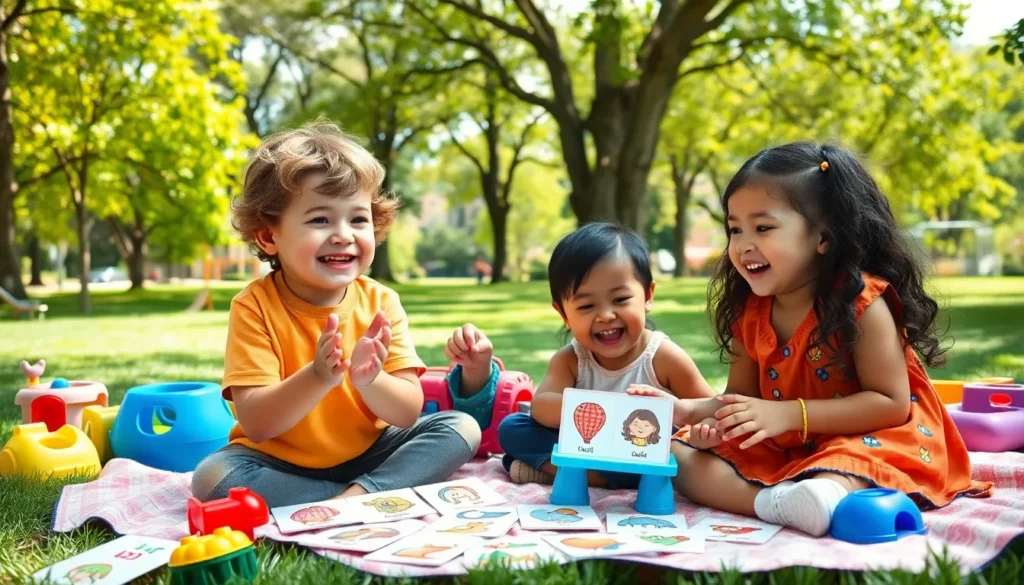
Phonological awareness is the secret sauce to unlocking a child’s reading potential, and it’s never too early to start cooking! For preschoolers, engaging in fun and interactive phonological awareness activities can turn learning into a delightful adventure. Imagine a world where kids can effortlessly recognize sounds, rhyme like pros, and blend syllables—all while giggling and having a blast!
Importance Of Phonological Awareness
Phonological awareness plays a critical role in developing early literacy skills. Focusing on these skills helps preschoolers become stronger readers and communicators.
Skills Developed Through Phonological Awareness
Phonological awareness encompasses several key skills. Children learn to recognize sounds within words, which aids in decoding during reading. They develop the ability to distinguish between different sounds, known as phonemic awareness. Rhyming skills emerge, enhancing their ability to hear similarities in word endings. Additionally, children practice blending sounds to form words, crucial for reading fluency.
Benefits For Preschool Learning
Benefits of phonological awareness extend beyond reading skills. Enhancing these abilities improves overall language development. Children with strong phonological awareness show increased vocabulary and better comprehension. Engaging in activities that promote these skills fosters confidence in communication. Furthermore, a solid foundation in phonological awareness prepares preschoolers for future academic success, creating a seamless transition as they enter formal education.
Engaging Phonological Awareness Activities

Engaging preschoolers in phonological awareness activities boosts their literacy skills. These activities can be fun and interactive, motivating children to explore sounds and language.
Rhyming Games
Rhyming games encourage children to listen to similar sound patterns. Using simple songs or rhymes, teachers can create an enjoyable atmosphere. Singing familiar tunes with rhyming words helps reinforce the concept of rhyme. Incorporating storytelling with rhymes adds depth, as children identify rhyming pairs. Examples include classic nursery rhymes or creating unique verses together. These activities promote sound recognition while keeping preschoolers captivated.
Sound Matching Activities
Sound matching activities enhance phonemic awareness by focusing on sound distinctions. Teachers often use pictures of objects that start with the same sound and ask children to identify matches. Flashcards featuring various sounds can also engage young learners, helping them connect sounds with visual cues. Incorporating games, such as memory matching, challenges children to remember sounds. This not only strengthens their listening skills but also makes learning enjoyable.
Syllable Clapping Exercises
Syllable clapping exercises promote awareness of syllable structures in words. Teachers can choose familiar words and guide children to clap for each syllable. For example, with the word “banana,” children can clap three times, reinforcing the idea of syllables. Using a variety of words increases engagement, as children also learn about syllable counts in different contexts. Incorporating movement keeps the energy high and enhances retention. These simple exercises build foundational skills essential for reading and writing success.
Incorporating Phonological Awareness In Daily Routines
Integrating phonological awareness into daily activities can enhance preschoolers’ reading skills. Engaging in simple routines promotes learning in enjoyable ways.
Story Time Activities
Utilizing story time fosters phonological awareness through interactive reading. Selecting books with rhythmic language or rhyming patterns captures children’s attention. Asking children to predict rhyming words enhances their listening skills. Encouraging them to repeat phrases or words reinforces sound recognition. Incorporating actions or gestures while reading helps them connect sounds with meanings. Opting for repetitive texts can further engage preschoolers, providing them with opportunities to practice phonemic awareness.
Singing Songs Together
Singing songs together introduces phonological concepts in a fun environment. Choosing songs with repetitive verses encourages participation and repetition. Clapping hands or tapping feet to the rhythm solidifies their understanding of syllables. Introducing finger plays with accompanying songs also reinforces sound patterns. Mixing in nursery rhymes exposes children to varied vocabulary and sound combinations. Regular singing during daily routines embeds phonological awareness naturally, making it an enjoyable experience.
Resources And Tools
Various resources and tools support the enhancement of phonological awareness in preschoolers. These materials enrich learning experiences and provide engaging ways for children to develop essential skills.
Recommended Books And Apps
A selection of books and apps plays a vital role in fostering phonological awareness. “Chicka Chicka Boom Boom” captivates children with its rhythmic language while introducing letters and sounds. Another excellent option, “Brown Bear, Brown Bear, What Do You See?” by Bill Martin Jr. focuses on repetitive phrases and rhyme. Interactive apps like “Starfall” and “ABCmouse” offer phonics activities that make learning more engaging. Combining stories and technology creates an immersive environment for skill development.
Printable Worksheets And Games
Numerous printable worksheets and games facilitate phonological awareness activities. Rhyming worksheets encourage children to match words that sound alike, enhancing their listening skills. Coloring pages featuring letters allow kids to associate sounds with written symbols, reinforcing their understanding. Interactive games like “Sound Scavenger Hunt” prompt children to find everyday objects that begin with specific sounds. These tools make learning fun while building foundational literacy skills.
Phonological awareness is a vital component of early literacy development for preschoolers. By integrating engaging activities into their daily routines, caregivers and educators can create a rich learning environment that fosters these essential skills. Fun games and interactive storytelling not only capture children’s interest but also lay the groundwork for successful reading and communication.
Utilizing resources like rhythmic books and educational apps further enhances this learning journey. As preschoolers explore sounds, rhymes, and syllables, they build confidence and a love for language. Investing in phonological awareness activities today prepares children for a bright academic future, ensuring they become proficient readers and effective communicators.