Patterns are everywhere, from the stripes on a zebra to the spots on a ladybug. For preschoolers, discovering these delightful designs can be a thrilling adventure! Engaging in pattern activities not only sparks creativity but also helps little ones develop essential skills like critical thinking and problem-solving. Who knew that making a simple ABAB pattern could turn into a mini dance party?
What Are Pattern Activities for Preschoolers?
Pattern activities for preschoolers consist of engaging exercises that help children recognize, create, and extend patterns. These activities lay a foundation for mathematical understanding and logical thinking. They may involve colors, shapes, numbers, and sounds to inspire children’s creativity and curiosity.
Children develop essential cognitive skills through pattern recognition. Engaging in these activities fosters problem-solving abilities as they learn to predict what comes next in a sequence. For instance, using colored beads to create necklaces allows children to explore various patterns while enhancing fine motor skills.
Art projects also provide an avenue for pattern exploration. Drawing repetitive designs or using stamps can help preschoolers grasp the concept of patterns visually. Utilizing everyday objects, like buttons or leaves, encourages children to identify patterns in their environment.
Physical activities offer another layer of learning. Movement-based exercises, such as following a sequence of claps and stomps, incorporate rhythm and sound patterns. These interactive experiences not only motivate physical activity but also enhance auditory processing skills.
Collaboration in group settings makes pattern activities even more enriching. Children can work together to create large-scale patterns using materials like building blocks or chalk on pavement. This teamwork cultivates social skills and encourages communication strategies among peers.
Pattern activities are vital for preschoolers’ development. They offer various opportunities for children to explore patterns creatively while building critical cognitive and social skills.
Benefits of Pattern Activities
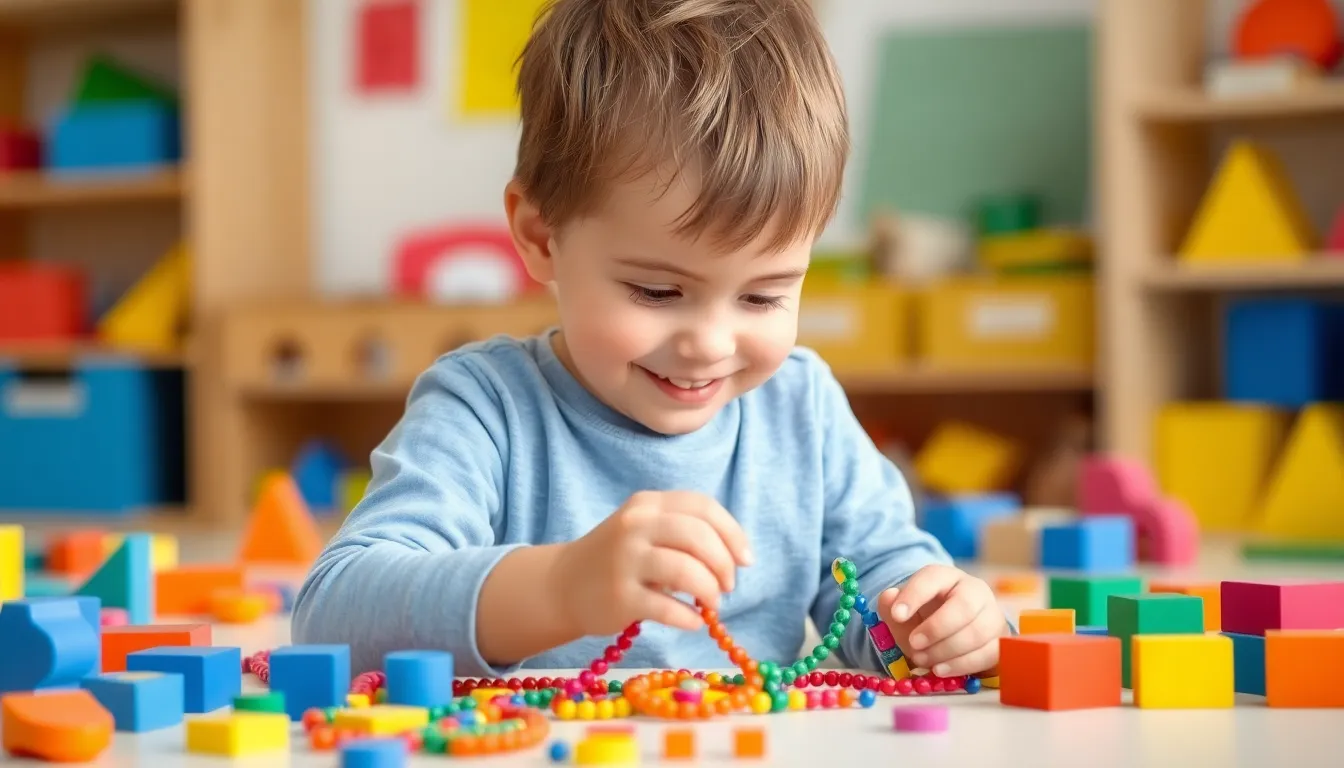
Engaging in pattern activities offers numerous advantages for preschoolers. These benefits significantly enhance early childhood development across various areas.
Cognitive Development
Cognitive development thrives through pattern activities. Recognizing patterns sharpens preschoolers’ analytical and critical thinking skills. Children making connections between shapes, colors, and numbers fosters logical reasoning. Problem-solving capabilities improve as they tackle challenges like completing sequences. At this stage, pattern activities also lay a foundational understanding of mathematics. Activities such as sorting and classifying objects stimulate cognitive engagement. Forming patterns with household items enhances children’s observational skills. Research demonstrates that early exposure to patterns correlates with stronger academic performance later on.
Motor Skills Improvement
Motor skills improve significantly with pattern activities. Activities like bead stringing enhance fine motor control as children grasp and manipulate small objects. Creating patterns using larger items, such as blocks, develops hand-eye coordination. These activities often involve repetitive motions, which refine dexterity. Engaging in rhythm-based pattern games, like clapping sequences, promotes gross motor skills. Incorporating movement into patterns not only makes learning fun but also boosts physical coordination. Children learn to navigate space while recognizing auditory patterns, enhancing overall sensory development. As children engage with patterns, they strengthen their physical skills effectively.
Types of Pattern Activities
Engaging in various types of pattern activities enhances preschoolers’ understanding of patterns across different modalities. These activities foster creativity while developing critical cognitive skills.
Visual Patterns
Visual patterns involve colors, shapes, and designs that children can see and manipulate. Common activities include arranging colored blocks or using patterned stickers. Sorting objects by color or shape outlines visual patterns effectively. Through crafts like repetitive painting or creating mosaics, preschoolers visualize patterns while having fun. These tasks improve recognition skills and stimulate creativity, allowing children to express themselves artistically. Teachers can introduce visual patterns during group activities to encourage collaboration and discussion among peers.
Auditory Patterns
Auditory patterns focus on sounds and rhythms, engaging preschoolers through music and clapping. Playing musical instruments in a sequence creates recognizable auditory patterns that captivate children’s attention. Group activities involving call-and-response chants or clapping games introduce rhythm and reinforce listening skills. Singing songs that incorporate repetition supports memory retention and pattern recognition through auditory means. Using instruments like drums or tambourines, children learn about sound patterns while developing their musical abilities.
Tactile Patterns
Tactile patterns engage preschoolers through touch and manipulation. Activities like stringing beads or sorting textured materials allow children to create and explore patterns through tactile experiences. Using playdough to create patterned shapes promotes fine motor skill development while reinforcing pattern concepts. Additionally, texture-based games involving sensory bins filled with different materials invite children to discover patterns by touch. These activities foster creativity while enhancing sensory exploration, crucial for cognitive development.
Examples of Pattern Activities for Preschoolers
Engaging in pattern activities offers preschoolers a creative outlet. These activities encourage children to explore patterns through various formats.
Craft Activities
Craft activities enhance children’s ability to recognize and create patterns. Preschoolers can make beautiful necklaces using colored beads, allowing them to experiment with color combinations. Creating mosaics with different shapes not only fosters creativity but also reinforces visual pattern recognition. Drawing repetitive designs with crayons engages artistic skills while introducing geometric patterns. Using stamps to create repeated impressions provides a tactile experience, enhancing both sensory exploration and pattern understanding. These fun and interactive crafts serve as an excellent method for children to learn through hands-on activities.
Song and Rhythm Games
Song and rhythm games develop auditory pattern skills effectively. Clapping games that involve repeating sequences teach children about rhythm while enhancing memory. Singing nursery rhymes with recognizable repetitive phrases also reinforces auditory patterns in a joyful manner. Introducing simple musical instruments allows children to explore sound patterns, fostering their ability to listen closely. Additionally, dancing to songs with clear rhythmic patterns helps preschoolers connect movement with sound, promoting gross motor development. These interactive songs and rhythm games create an enjoyable environment for learning and development.
Engaging preschoolers in pattern activities is crucial for their development. These activities not only make learning enjoyable but also cultivate essential skills that contribute to cognitive growth. By exploring patterns through various mediums—visual, auditory, and tactile—children enhance their creativity and problem-solving abilities.
Incorporating patterns into daily routines fosters a rich learning environment where preschoolers can thrive. As they recognize and create patterns, they build a strong foundation for future mathematical understanding and logical reasoning. Embracing these playful learning experiences ensures that young children develop a love for exploration and discovery while honing their critical thinking skills.