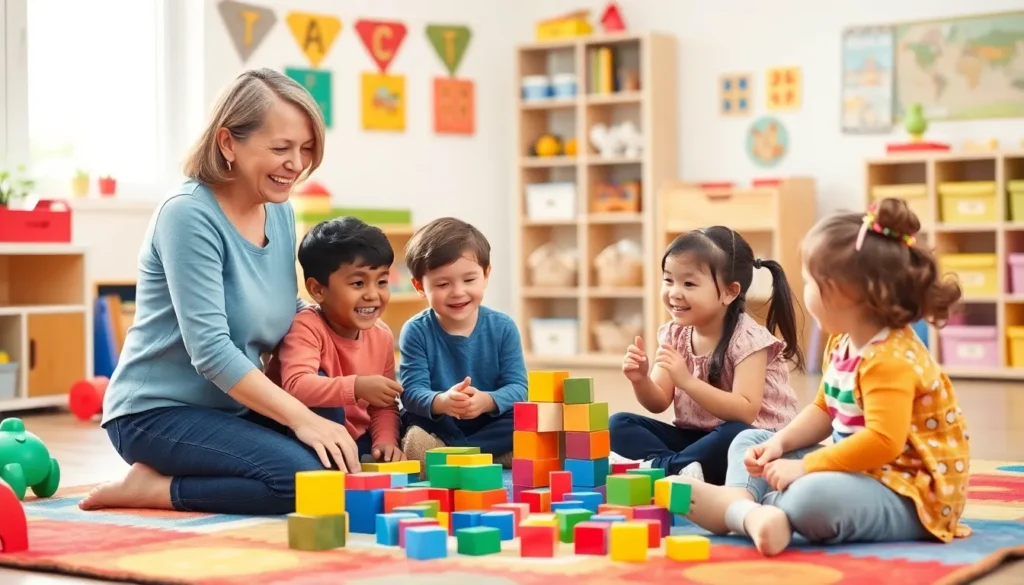
Getting preschoolers excited about numbers can feel like trying to teach a cat to swim—challenging yet rewarding. But introducing numbers at this young age is vital for building a strong foundation in math and critical thinking. With a little creativity and a dash of fun, parents and educators can transform mundane counting into an adventure that sparks curiosity.
Why Introducing Numbers to Preschoolers Is Important
Introducing numbers to preschoolers fosters essential skills for lifelong learning. Engaging young children with numbers enhances their cognitive skills and social interactions.
Cognitive Development Benefits
Cognitive growth accelerates when children learn numbers. Recognizing numbers improves memory and problem-solving abilities. Mastery of basic counting lays the groundwork for future math skills. Number recognition also enhances pattern recognition, critical for sophisticated mathematical concepts. Engaging preschoolers in counting games can stimulate curiosity about quantities and relationships. Through playful activities, they begin to understand the world around them, leading to improved analytical skills.
Social and Emotional Growth
Social skills flourish when children learn numbers. Group activities involving counting promote teamwork and collaboration among peers. Children often feel a sense of accomplishment as they master counting, boosting their self-confidence. Sharing counting experiences fosters communication among preschoolers, enhancing their language skills. Emotional development also benefits as children learn patience while waiting for turns in counting games. Forming connections through shared counting activities encourages friendships and strengthens social ties.
Effective Strategies for Introducing Numbers
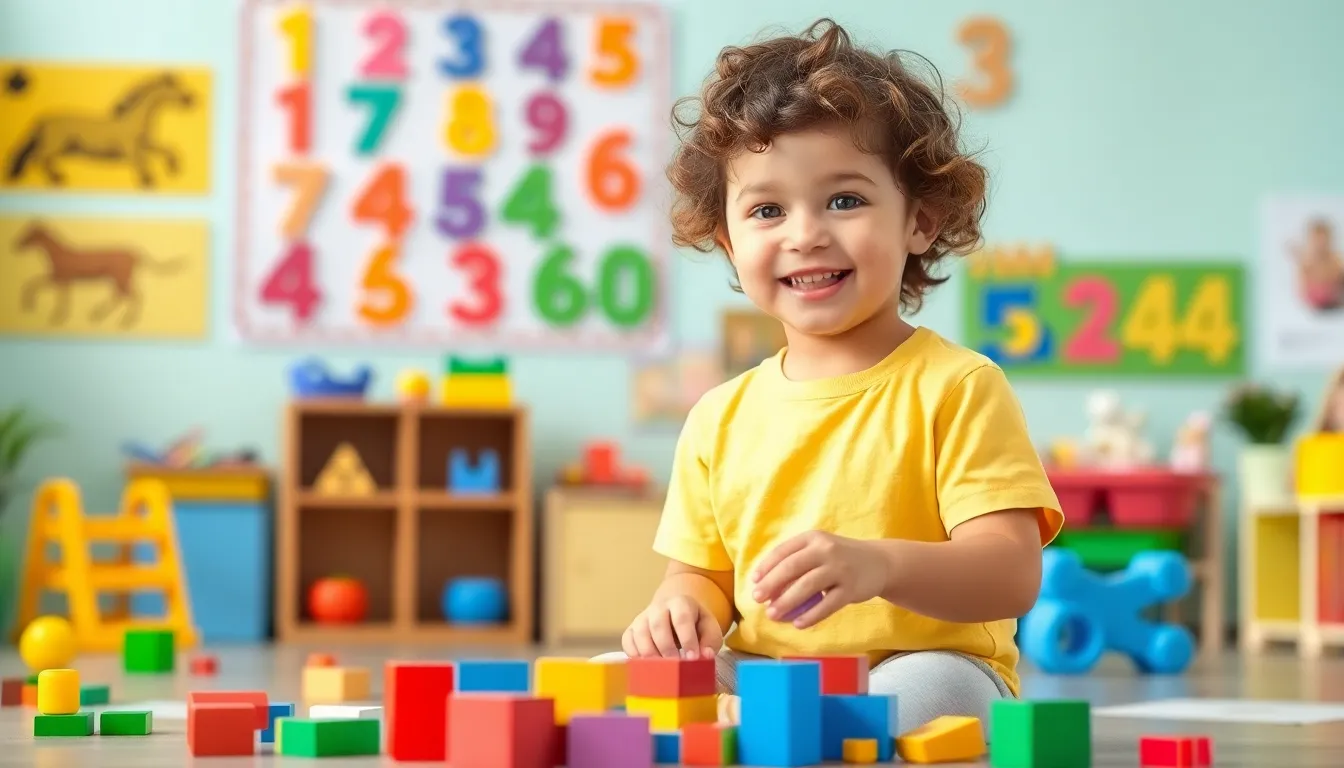
Engaging preschoolers in number learning requires effective strategies that foster their curiosity and enthusiasm. Numerous approaches exist, each with its benefits.
Play-Based Learning Approaches
Integrating play in education enhances engagement. Children learn best when they explore and experiment. Incorporating blocks encourages children to count as they build structures. Counting songs capture attention while promoting rhythm and number recognition. Outdoor games, such as hopscotch, allow children to jump and count, blending physical activity with learning. Storybooks featuring numbers stimulate interest while merging narratives with mathematical concepts. These playful methods create a dynamic learning environment that captures young learners’ imaginations.
Interactive Activities and Games
Interactive activities provide hands-on experiences that reinforce number concepts. Simple number scavenger hunts let children search for specific quantities in their environment, making learning adventurous. Group activities like number bingo create fun competition while boosting recognition skills. Math-based apps designed for preschoolers can offer interactive lessons that adapt to their learning pace, promoting engagement. Craft activities, such as creating number collages, not only develop fine motor skills but also deepen understanding of numerical values. Each game or activity builds on children’s existing knowledge, ensuring continuous growth in their mathematical journey.
Recommended Resources and Tools
Many resources support introducing numbers to preschoolers effectively. Selecting the right tools enhances engagement and fosters a love for learning.
Books for Introducing Numbers
Books serve as excellent tools for introducing numbers. Titles like “Chicka Chicka 1 2 3” and “Ten Black Dots” combine storytelling with counting. Engaging illustrations captivate children’s attention, making learning enjoyable. Additionally, “The Very Hungry Caterpillar” weaves counting into a delightful narrative. Incorporating rhymes and repetition reinforces number recognition and memorization. Parents and educators can find these books at local libraries and bookstores for easy access. Overall, children benefit from exploring these resources in a cozy reading environment.
Educational Apps and Online Resources
Digital resources offer another avenue for engaging preschoolers with numbers. Apps such as “Endless Numbers” and “Moose Math” provide interactive, fun experiences centered around counting. Children practice number recognition through games that adapt to different learning levels. Websites like Starfall and ABCmouse supply additional activities and worksheets that reinforce number concepts. Videos on platforms like YouTube, featuring number songs and animations, capture kids’ interest effectively. With these varied online options, learning about numbers becomes an engaging adventure for young learners.
Common Challenges and Solutions
Introducing numbers to preschoolers presents unique challenges. Addressing these obstacles fosters growth and understanding.
Addressing Learning Differences
Each child learns at their own pace, creating a need for tailored approaches. Some children respond better to visual aids, while others excel with hands-on experiences. Observing individual needs helps parents and educators modify strategies accordingly. Providing different activities, such as interactive counting games for visual learners or tactile methods like counting with blocks for kinesthetic learners, supports diverse learning styles. Consistent encouragement also builds confidence in children, promoting a positive learning environment that respects their unique journeys.
Keeping Engagement High
Engaging preschoolers requires creativity and variety. Incorporating games, songs, and activities sustains interest and excitement around numbers. Using colorful visuals and relatable examples keeps children’s focus and makes learning relatable. Rotating activities ensures that children encounter new experiences regularly. Passionate involvement from educators or caregivers enhances motivation, as preschoolers often mimic adults. Utilizing simple challenges, like counting objects during daily routines, encourages active participation while reinforcing numerical concepts.
Introducing numbers to preschoolers is a vital step in their early development. Through engaging and playful methods, children not only grasp fundamental math concepts but also enhance their cognitive and social skills. The right mix of activities keeps their curiosity alive while fostering a love for learning.
By utilizing creative resources and maintaining a positive environment, parents and educators can significantly impact a child’s relationship with numbers. This foundation sets the stage for future academic success and builds essential life skills. Embracing the journey of number exploration can transform learning into an enjoyable adventure for every preschooler.