
Every parent knows that kids can be like tiny tornadoes—energetic, unpredictable, and sometimes a little too wild for comfort. Setting boundaries might sound about as fun as a trip to the dentist, but it’s essential for raising happy, well-adjusted kids. Think of boundaries as the guardrails on a rollercoaster ride; they keep the thrills in check and prevent the little ones from flying off the track.
Establishing limits not only helps kids understand the world around them but also teaches them valuable life skills. It’s not just about saying “no”—it’s about guiding them to make better choices. So buckle up and get ready to explore the art of boundary-setting. With a little humor and a lot of love, parents can transform the chaos into a harmonious family life.
Importance Of Setting Boundaries For Kids
Setting boundaries promotes safety and security. Children thrive when they know their limits and understand acceptable behaviors. These boundaries act as guidelines that help them navigate complex social situations, creating a clearer understanding of right and wrong.
Establishing limits fosters responsibility. Kids learn consequences from their actions, leading to better decision-making in the future. When parents clearly communicate expectations, children feel more accountable for their choices.
Teaching boundaries also nurtures confidence. With defined limits, kids explore their independence while knowing their parents support and protect them. This balance between freedom and security builds a strong foundation for their self-esteem.
Improving communication plays a vital role in boundary-setting. Engaging kids in discussions about rules promotes understanding and respect. When children contribute to the conversation, they recognize the importance of boundaries.
Observing and respecting personal space is an additional benefit. Kids learn to appreciate the boundaries of others, fostering empathy and healthy relationships. Understanding these concepts early in life prepares them for teamwork and collaboration in various settings.
Encouraging emotional regulation is essential. Kids equipped with boundaries cultivate better emotional responses to challenges. They learn to express feelings appropriately and respond to situations rather than react impulsively.
Overall, the significance of setting boundaries for kids extends beyond immediate behavior. These frameworks contribute to lifelong skills, benefiting their interactions and personal growth throughout life.
Understanding Boundaries
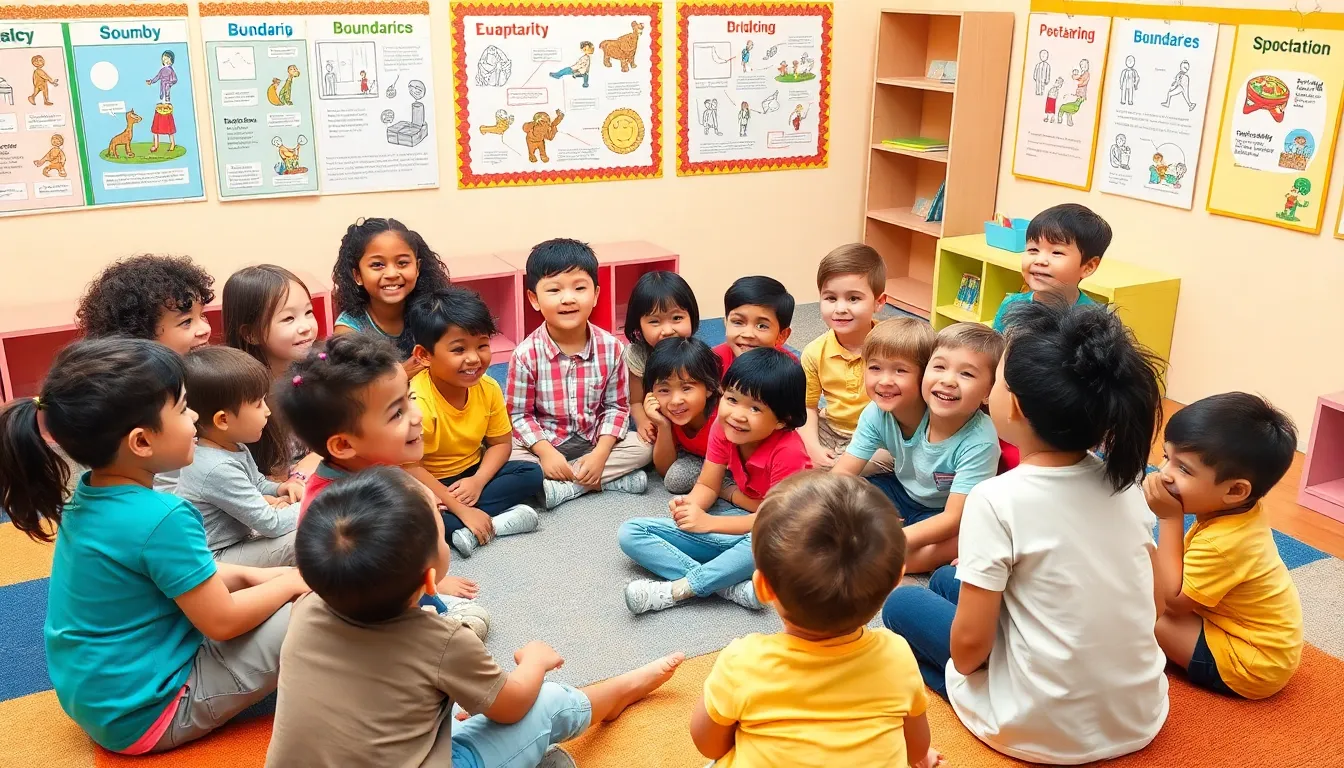
Setting boundaries encompasses various aspects of a child’s development. It involves helping children learn and respect limits in different contexts.
Different Types Of Boundaries
Physical boundaries define personal space. Children understand what is acceptable when it comes to touch and proximity to others. Emotional boundaries protect feelings. Kids learn to express their emotions while respecting others’ feelings. Time boundaries manage schedules. Allowing children to know when activities start and end cultivates responsibility. Material boundaries relate to sharing. Teaching children about personal belongings instills respect for possessions and encourages cooperation. Lastly, cognitive boundaries help kids differentiate between right and wrong, guiding their decision-making processes.
Benefits Of Boundaries For Children
Establishing boundaries promotes safety and security. Children thrive when they understand acceptable behaviors. Increased responsibility develops as kids learn the consequences of their actions. Another critical benefit involves nurturing confidence. With boundaries in place, kids explore independence while feeling supported. Communication improves alongside boundary-setting, as discussions about rules foster understanding and respect. Observing personal space enhances empathy. Kids learn to appreciate others’ boundaries, cultivating respectful relationships. Emotional regulation is another key advantage, equipping children with skills to express feelings appropriately and respond thoughtfully to challenges.
Strategies For Setting Boundaries
Establishing effective strategies is essential for setting boundaries with kids. These approaches ensure children understand expectations and feel secure.
Communicating Expectations Clearly
Communicating clearly helps children grasp what is expected of them. Use straightforward language when discussing rules or boundaries. For example, instead of vague statements, specify what behavior is acceptable. Encourage questions to clarify misunderstandings. Be open to dialogue, allowing kids to express their thoughts. Implement visual aids, such as charts or lists, to reinforce rules in a tangible way. Displaying boundaries visibly at home supports retention and comprehension. Regularly revisit these expectations to keep them fresh in children’s minds.
Consistency Is Key
Ensuring consistency strengthens the impact of boundaries. Consistent responses to behavior create predictability for children. When parents enforce rules uniformly, kids learn to trust the framework in place. For instance, if bedtime is set at 8 p.m., enforcing it every night builds routine. Reinforcement of boundaries should occur across all caregivers, including relatives or teachers. Regularly reviewing the boundaries together promotes accountability. Adjustments can occur but must remain steady once established to maintain stability and security for children.
Common Challenges In Setting Boundaries
Setting boundaries often presents several challenges for parents. Resistance from kids manifests in various forms, including defiance, tantrums, or passive-aggressive behavior. When children feel restricted, they may push back against rules even more fiercely. Understanding this reaction can help parents remain calm and seek productive solutions. Exploring the reasons behind this resistance fosters empathy and enhances a child’s awareness of their feelings.
Parent-child communication breakdowns also pose significant challenges. Misunderstandings can arise when parents use vague language or fail to engage kids in discussions about boundaries. Children often interpret rules differently than intended, leading to frustration on both sides. Establishing open dialogues and checking for comprehension establishes clarity and builds trust. Maintaining regular discussions about expectations keeps lines of communication flowing and reinforces the significance of boundaries in daily life.
Tips For Successful Boundary Setting
Setting boundaries effectively requires intentional strategies. Parents can employ various techniques to ensure their child understands and respects these limits.
Positive Reinforcement
Using positive reinforcement helps children internalize acceptable behaviors. Recognizing and rewarding good choices encourages kids to repeat those actions. For instance, acknowledging when a child respects personal space or follows rules strengthens their understanding. Praise can be verbal or through small rewards, serving as motivation for their continued compliance. This approach creates an environment where children feel supported, making it easier for them to adhere to established boundaries. It also fosters a sense of achievement, as kids recognize the connection between their actions and parents’ approval.
Modeling Behavior
Modeling behavior provides a powerful lesson in boundary setting. Children observe and imitate adult actions, so demonstrating healthy boundaries is crucial. When parents respect their own limits and the limits of others, kids are more likely to follow suit. For example, if adults apologize when they overstep, children understand the importance of acknowledging mistakes. Regularly practicing clear communication in family settings offers a framework for kids, reinforcing the values parents wish to instill. Adults can discuss their boundaries openly, allowing children to ask questions and engage in dialogue, ultimately enhancing comprehension and respect for limitations.
Setting boundaries for kids is a vital part of their development and well-being. By establishing clear and consistent limits, parents can foster a sense of safety and security that allows children to thrive. This process not only helps children understand acceptable behaviors but also nurtures their independence and responsibility.
Through effective communication and positive reinforcement, parents can create an environment where boundaries are respected and understood. It’s essential to approach this task with love and humor, making it a collaborative effort rather than a strict imposition. As children learn to navigate their world with these guidelines, they build essential skills that will serve them throughout their lives. Embracing this journey together can lead to stronger family connections and empowered children.