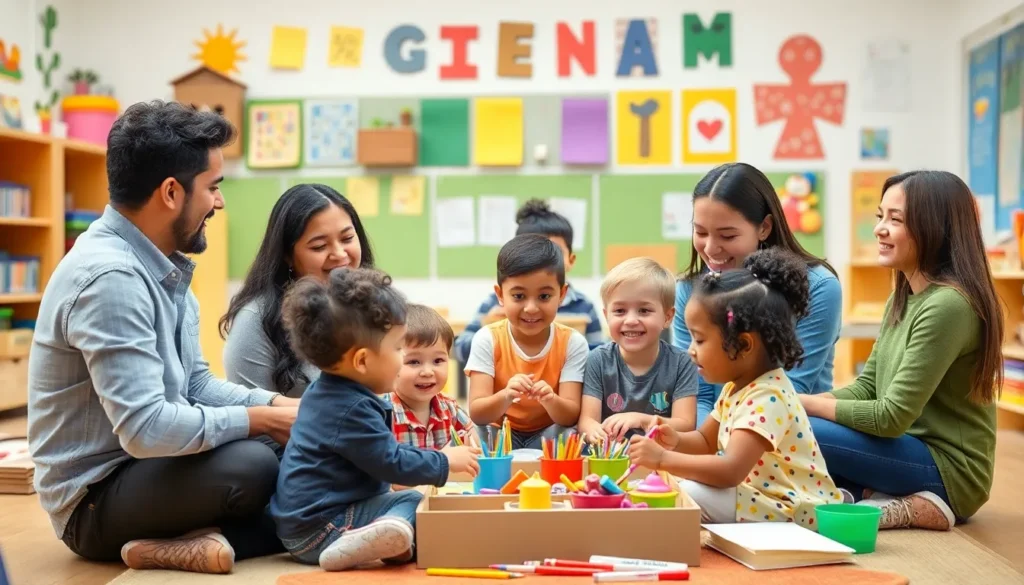
When it comes to preschool, family involvement isn’t just a nice-to-have; it’s a game changer. Imagine a world where parents are not just drop-off champions but active participants in their child’s early education journey. With a sprinkle of enthusiasm and a dash of creativity, family engagement can transform the preschool experience from mundane to magical.
Importance Of Preschool Family Involvement
Active family involvement plays a vital role in preschool education. Participation from parents enhances children’s learning experiences significantly.
Benefits For Children
Family involvement fosters positive emotional connections, creating a secure foundation for learning. Children with engaged parents often display improved social skills and exhibit greater enthusiasm toward school activities. Structured routines at home contribute to better academic performance, as children thrive when they receive encouragement. Active participation in school events cultivates a sense of belonging, which helps children develop confidence and resilience. Research indicates that kids whose families are involved tend to achieve higher literacy and numeracy skills, setting the stage for lifelong learning.
Benefits For Families
Families experience numerous advantages from active involvement in their child’s preschool journey. Engaging with teachers and staff enhances communication, fostering trust and collaboration. Parents often gain insights into developmental milestones, which helps them support their child’s growth more effectively. Participation also strengthens family bonds, as shared experiences in school create lasting memories. Ultimately, being involved cultivates a strong sense of community, allowing families to connect with others facing similar challenges. Research shows that these connections can lead to increased support networks, improving overall family well-being.
Strategies For Encouraging Family Involvement

Family involvement in preschool settings can be enhanced through effective communication and engaging activities. Implementing these strategies builds a collaborative environment that supports children’s learning.
Communication Techniques
Effective communication fosters strong relationships between families and preschool staff. Regular updates via newsletters keep parents informed about classroom activities. Utilizing text messages or apps also ensures quick communication regarding important events or reminders. Hosting periodic parent-teacher conferences encourages meaningful discussions about children’s progress and concerns. Encouraging open dialogue helps parents express their thoughts and provide valuable insights. Providing resources in multiple languages can make information accessible for all families, enhancing inclusivity.
Engagement Activities
Engaging families in interactive activities boosts their connection to the preschool community. Organizing workshops allows parents to participate in hands-on learning experiences, gaining skills to support their children’s development. Scheduling family fun nights can create enjoyable opportunities for parents and children to bond with peers while experiencing the school environment. Involving families in field trips not only enriches children’s learning but also fosters shared memories. Encouraging volunteer opportunities, such as classroom helpers, allows parents to contribute directly and witness their child’s learning firsthand.
Challenges In Promoting Family Involvement
Promoting family involvement in preschool faces several challenges that can hinder effective participation.
Time Constraints
Families often juggle multiple responsibilities, including work and other commitments. Limited time creates barriers against attending school events or helping with activities. Finding opportunities that fit parents’ schedules becomes crucial for enhancing involvement. Schools can provide flexible meeting times and online resources to alleviate these limitations. Adjusting engagement activities to accommodate varying schedules can increase participation rates.
Sociocultural Barriers
Sociocultural factors play a significant role in family engagement. Cultural beliefs and practices sometimes influence parents’ willingness to participate in preschool activities. Language differences and communication gaps may hinder effective collaboration between families and educators. Developing culturally responsive approaches encourages inclusivity and fosters understanding. Schools can create an environment that respects diverse backgrounds and builds connections among families. Addressing these barriers can lead to improved involvement, benefiting children’s educational experiences.
Successful Programs And Initiatives
Successful programs demonstrate the impact of family involvement in enhancing preschool education. These initiatives create opportunities for parents to engage actively in their child’s learning journey.
Case Studies
Many preschools implemented innovative programs that resulted in increased family participation. For instance, a California preschool launched monthly family workshops focusing on early literacy. Parents reported improved reading skills in their children after attending these sessions. Another program in New York involved family volunteering for classroom activities, fostering closer relationships between parents and educators. This initiative led to parents expressing higher satisfaction with their child’s school experience. Evaluation of these case studies shows that targeted programs significantly improve family engagement and student outcomes.
Best Practices
Adopting best practices enhances family involvement in preschool settings. Regular communication through newsletters, texts, and apps keeps parents informed about school activities and events. Hosting interactive workshops encourages participation, allowing parents to connect with educators while learning valuable skills. Schools can offer flexible meeting schedules to accommodate families’ diverse commitments. Bridging cultural and language gaps through translation services fosters an inclusive environment. Engaging families in volunteering opportunities directly contributes to a stronger school community, encouraging a collaborative spirit that benefits students and parents alike.
Family involvement in preschool education is more than just a beneficial addition; it’s a vital component of a child’s early learning journey. When families actively engage in their child’s education, they not only enhance academic outcomes but also foster emotional connections that support lifelong learning. By creating a welcoming environment and providing opportunities for participation, schools can overcome barriers that may hinder family engagement. This collaboration enriches the preschool experience for children and strengthens the community bonds among families. Ultimately, embracing family involvement sets the stage for a brighter future for both children and their families.